

🔥 5RW | You Will Burn Out
One Idea. Five Reasons. Five Minutes
This issue of 5RW is sponsored by: ThePlaybookx.com
As New and Emerging Leaders, our problem isn’t a lack of ideas. It’s finding the TIME, SPACE, and CONFIDENCE to bring them to life. Discover practical tools and frameworks to Think Smarter. Move Faster. Lead with Confidence.
Sponsor this newsletter to reach 5,000+ active readers
(info@creativeldrs.com)
TL;DR:
It’s Not “If”—It’s “When” → Stress is acute and temporary. Burnout is chronic and systemic. You can’t push through it — you must redesign how you work.
It’s Quicksand → Burnout builds invisibly through overload, uncertainty, isolation, outdated systems, and the illusion of choice. You can’t fix what you can’t see.
The System Always Collects → Left unchecked, burnout compounds like debt — draining individuals, dividing teams, and eroding culture until the system breaks.
Check Your Pulse → Just like a doctor checks a heartbeat, creative leaders must regularly check their own — Pressure, Uncertainty, Loneliness, System, Energy — to catch burnout early.
It’s the System → Burnout isn’t solved by leaving the job; it’s prevented by redesigning the system. Creative leaders don’t run from pressure — they rebuild how energy flows.
😰 I Shouldn’t Feel This Way
Lately, I have been feeling a bit off.
My morning meditation has been restless.
My writing—the thing I love most—feels clunky and forced.
Tasks that usually flow now drain me.
I told myself I was just tired. That I needed to push through. But things got worse.
So I called my coach.
As I described what I was feeling: lack of motivation, emotional exhaustion, and detachment. She started asking questions:
“Chronic fatigue that rest can’t fix?” — Yes. “Increased irritability? Cynicism?” — Yes. “Feeling overwhelmed? Self-doubting more than usual?” “I mean, kind of, but I’m trying something new, so—”
She cut me off.
“Please stop justifying how you feel. How you feel is just how you feel.”
Silence.
*Am I… (*didn’t even dare to say the words) I didn’t think I was. But the signs were unmistakable.
And this wasn’t just stress. Stress, I knew how to handle.
This is something different.
After that call, I did what I always do when I don’t understand something. I study!
What I found changed how I see burnout completely.
Here are Five Reasons Why… 🔥 You Will Burn Out
I — It’s Not “If”—It’s “When”

You can’t handle burnout the same way you handle stress.
Stress is acute. Something happens (a deadline, a conflict, a crisis), you handle it, you recover. Identify the source → Remove it → Rest → Feel better.
Burnout is chronic. It accumulates silently. No single trigger. No defining moment when it started. You can’t just fix one thing and recover.
That’s why nothing I tried was working. I’d been fighting the wrong battle.
Pushing through isn’t an option.
You can’t “push through” burnout the way you push through stress. You can’t “take a weekend off” and bounce back.
Burnout requires something different: systemic solutions.
And the more I researched, the clearer it became:
At the current pace and complexity of work, burnout isn’t IF—it’s WHEN.
I needed to understand what causes it.
II — It’s Quicksand

The biggest problem with burnout is that it, unlike stress, doesn’t hit you all at once.
Just like Quicksand, it creeps in quietly and relentlessly without you even noticing until it’s too late.
And if you’re a new leader, you’re walking straight into all of them.
1. Invisible Overload
Knowledge work doesn’t sweat. No heavy lifting. No visible strain.
So we assume mental effort is limitless—until our brains start short-circuiting.
Back-to-back meetings. Constant context switching. Endless interruptions and distractions.
And just when your brain needs rest, you face:
2. Constant Uncertainty
Our ancestors fought tigers. We fight volatility.
Every shift—in markets, tools, teams—keeps our nervous system on high alert.
But unlike a tiger, the threat never leaves. We stay in survival mode for months. Sometimes years. The brain treats uncertainty like danger. Chronic ambiguity becomes chronic stress.
That constant stress makes the third cause even more dangerous:
3. Disconnected Connection
We talk all day—in meetings, messages, threads—but meaningful connection? Almost none. Work has become increasingly more transactional, rather than relational.
We’re surrounded by people, yet most of us feel alone. We mainly work in silos, each one on their own. Only to then share and protect our work. We cooperate way more than we actually collaborate.
Isolation makes it harder to handle the fourth cause:
4. Complexity Without Competence
Work got exponentially harder. So we consumed more: podcasts, articles, courses, frameworks.
But consumption isn’t competence.
We save articles we never read. We bookmark frameworks we never test. We buy courses we never finish. Meanwhile, the actual work—hybrid teams, new tech, impossible expectations—doesn’t wait for us to “finish learning.”
When information replaces practice, exhaustion fills the gap.
5. The Illusion of Choice
“If this gets too hard, I’ll just quit.”
But quitting doesn’t fix the system—it just resets the cycle. A new job, a new position, the same unresolved issues.
You can’t outrun burnout if you’re carrying the same system with you.
You don’t fix burnout by changing the view. You fix it by changing the system.
III — The System Always Collects
When burnout builds unchecked, everyone eventually pays the price.
Personally, it steals clarity first — your focus dulls, confidence fades, and the work that once fueled you starts to drain you.
Teams begin to fracture next — collaboration turns to competition, creativity dries up, and silence replaces trust.
And at the organizational level, culture erodes: innovation slows, turnover rises, and the same pressure that once drove results starts driving people out.
You can’t outrun it — burnout compounds quietly accumulate until the system breaks.
If we don’t fix the system, the system will fix us.
IV— The Pulse
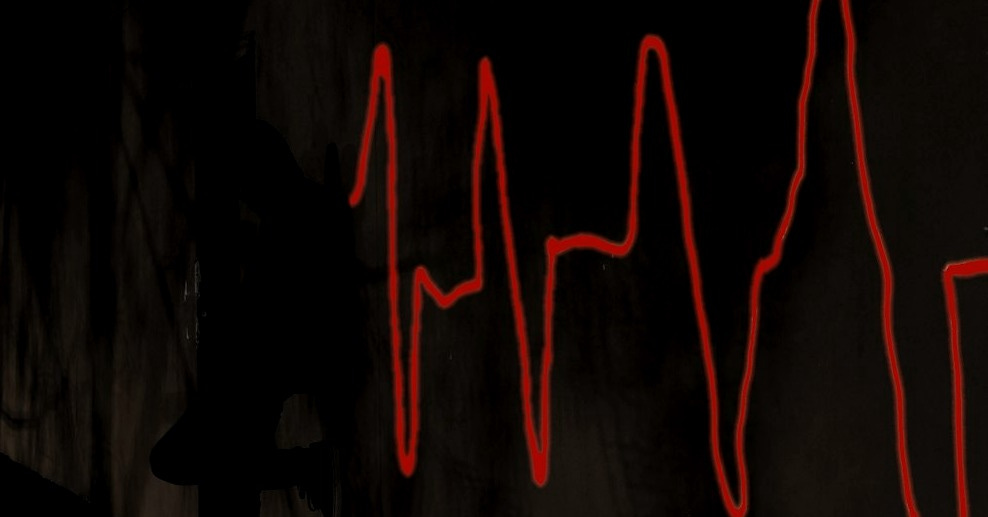
Just like a doctor feels for a pulse to assess a patient’s health,
the only way to keep burnout in check is to regularly take your own.
Most of us wait until the crash, when fatigue, frustration, or cynicism becomes impossible to bear. But by then, burnout has already spread through our system.
Checking your pulse isn’t therapy — it’s maintenance.
It’s how you catch system failures before they happen.
Here’s a simple way to start.
The PULSE Check
P — Pressure
→ Am I carrying more than what’s mine to carry?
When everything feels urgent, something’s off. Pressure without prioritization becomes poison.
U — Uncertainty
→ Do I understand what’s expected of me — and what’s actually in my control?
Clarity lowers cortisol. Confusion feeds it.
L — Loneliness
→ Who can I be honest with about how I really feel?
Connection is the most underused form of recovery.
S — System Overload
→ Have my tools, routines, and habits kept up with the pace of my work?
If the system feels outdated, stress multiplies faster than progress.
E — Energy
→ Do I end my day with energy or depletion?
Your output is a lagging indicator of your input. If every day ends empty, the system’s running dry.
The rule: Don’t fix burnout once.
Measure it often.
“You don’t prevent burnout by resting once in a while.
You prevent it by regularly checking your pulse.”
‼️ As a New leader, you will be overwhelmed and constantly run out of time.
Here are 5 PLAYS (practices) to transform Anxiety into Control.
V — It’s the System
Burnout doesn’t vanish overnight.
But once you learn to see it as a system, not a symptom, everything changes.
You stop chasing balance and start building rhythm.
You stop trying to “escape work” and start redesigning how you work.
When you keep your pulse steady:
Energy stops leaking.
Focus returns.
Progress feels real again.
You lead differently, too — with empathy, clarity, and pace.
Because the leaders who can read their own pulse become the ones
who protect the pulse of others.
And here’s the final truth:
Changing jobs won’t save you. Changing systems will.
“You don’t fix burnout by leaving the fire —
you fix it by learning how to put it out.”
Creative leaders don’t run from pressure.
They redesign the systems that create it.
These are Five Reasons Why… 🔥 You Will Burn Out.
Something for you.
I reached a breaking point—my schedule controlled me. There was no time to THINK, EXPERIMENT, or CREATE. I needed a way to break this cycle. These are some best practices that help me regain control of my schedule.
1 Million Creative Leaders by 2030
Our mission is to enable and empower a new generation of leaders. To do so, we have created a community, workshops, a podcast, and…
4 Playbooks to Help You Lead with Clarity & Confidence
Every new role brings the same challenges: time, decisions, focus, and complex problems. These Playbooks are the tools I wish I had as a new leader.
1. Own Your First 100 Days → Start strong, set the tone, and build confidence fast.
2. Take Control of Your Time (TMXI) → Reclaim 10–20% of your week and protect deep creative work.
3. Make Better Decisions (DMXI) → Cut through complexity and move from hesitation to action.
4. Solve Complex Problems (CPSXI) → Reframe challenges and spark ideas that drive innovation.